Our History
Milano Design Terminal
HONG KONG – SAIGON
Where European design meets Asian manufacturing
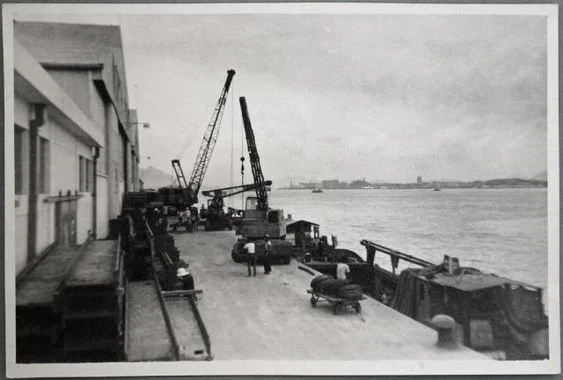
At the end of the 1960s, the manufacturing landscape began a profound transformation. The celebrated Made in Hong Kong, together with Made in Japan, had reached maturity: production costs were rising, cities were becoming denser, while new Asian territories started to offer more competitive conditions. It was the era of Hong Kong factories producing plastics and electronics, of Japan’s provincial industries, and of the first major emerging industrial districts.
Within this context, a significant share of production shifted to Taiwan and South Korea, opening a new phase in Asian industry—more flexible, more export-oriented, and more deeply integrated with Western markets.
The real paradigm shift came in 1980 with the establishment of the Shenzhen Special Economic Zone. In just a few years, southern China became the new manufacturing heart of the world. Factories crossed the border, while Hong Kong gradually ceased to be a place of production and evolved into an international hub for trade, logistics, and finance.
It is precisely at this historical moment that Milano Design Terminal was born.
A clear vision from the very beginning
Milano Design Terminal was founded in Hong Kong as a specialized trading company, with a clearly defined vision from the outset: to build a stable bridge between the new Asian manufacturing ecosystem and the European market for furniture and home decoration. The founding idea was to unite Italian and Chinese creative expertise within a shared operational platform, based in Hong Kong.
The name itself expresses this vision.
Milano, the capital of design in the 1980s, is taken as the cultural and design reference point. Design is understood in its Italian sense: a discipline closely linked to architecture, interior design, furniture, lighting, and home decoration. Not generic industrial product design, but a project culture rooted in the tradition of the Politecnico di Milano and European interior design.
Terminal indicates both a point of arrival and departure: a place of selection, coordination, and distribution. Not a factory, but a platform of competencies—predominantly Italian—capable of guiding Asian production toward a language coherent with European taste. The idea was to create a hub-and-spoke system in Hong Kong around Design in Italy and Made in China.
Specialization and production districts
From the very beginning, the company chose a precise and focused scope: lighting, home decoration, and furniture, with particular attention to ceramics and lighting products.
The major production districts of Guangdong—Foshan, Guzhen, Chaozhou—offer a unique heritage of artisanal know-how, manufacturing capacity, and industrial flexibility. Milano Design Terminal Trading works with this heritage not as a simple intermediary, but as an active agent of interpretation and transformation.
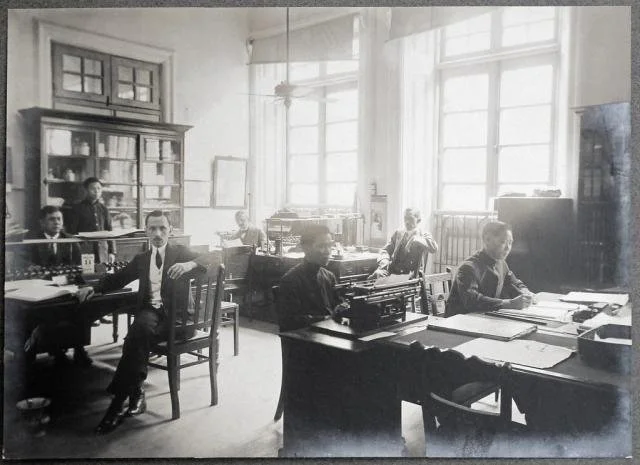
Internally, the company is organized according to different industrial districts and initially concentrates its work on mid-tier cities, where skills and costs allow for greater control and production continuity.
This is not simple sourcing, but true product curation: shapes, finishes, colors, and proportions are selected and directed to dialogue with contemporary interiors and the expectations of the international market.
The Hong Kong – Milan axis
The operational core remains in Hong Kong, the nerve center for quality control, logistics, and financial management. Milan, on the other hand, becomes the European terminal—the gateway to the market—through which collections are first distributed in Italy and then across France, Germany, Switzerland, and Northern Europe.
The support of international financial institutions such as HSBC enables the company to operate with continuity, reliability, and a long-term vision, supporting the growth of partners and clients over time.
Consistency over time
Unlike many trading companies founded in the same years, Milano Design Terminal Trading chose specialization as a strategic value.
One sector, one focus, one identity.
Over time, the catalog expands—glass, metal, resins—but the approach remains unchanged: to select and develop home products that combine functionality, quality, and aesthetic sense, while maintaining strong stylistic coherence.
Vietnam as the new operational center
Following customs barriers, the impact of COVID, and the introduction of tariffs on China, a new decisive transition began: the move to Vietnam, when Milano Design Terminal Trading established its own company in Saigon. Initially conceived as a logistics hub, the Vietnamese presence gradually became the true engine of the company.
Today, Saigon is not only a production center, but the operational, creative, and design heart of the business. Collections are developed here, materials are selected, and suppliers are coordinated. The production of lamps and candles, entirely based in Vietnam, represents the core of the company’s activity. Light becomes the very essence of the brand’s mission and identity.
Milano Design Terminal Trading continues to operate with its historic base in Hong Kong, while part of European-oriented production remains in China. Saigon stands as the industrial and creative center, integrated with a consolidated American distribution network.
A bridge that continues to function
Today, Milano Design Terminal Trading is a solid organization, capable of moving with agility in a constantly evolving global market. Its strength lies in the ability to read change, anticipate trends, and transform the complexity of Asian manufacturing into value for the European market.
Founded in 1980, at the moment when Hong Kong ceased to be a factory and became a commercial brain, the company continues to do what it has always done: connect worlds, cultures, and products—with Milan as its cultural reference and Asia—today, in particular, Vietnam—as its manufacturing engine.
Milano Design Terminal HONG KONG SAIGON
Dove il design europeo incontra la manifattura asiatica

There are currently three locations, an assembly line in Guzhen, a sales office in Hong Kong and , a new operational headquarters in Saigon The staff is Chinese Vietnamese with an Italian, the architect Gabi Peretto.
Currently the main customers are
MAISONS DU MONDE FRANCE
EL CORTE INGLES SPAIN
NEMO
COINCASA ITALY
FONTANA ARTE
LUCITALIA
DELVIS
LUMEN CENTER
RIPLEY CHILE
RIPLEY PERU
ILAW PHILIPPINES
PROLIVING FRANCE