0
Passa al contenuto
CONTACT
HISTORY & CITY
CLIENT
WORKING
IMAGE BLOG
OUR LOGO
EVENTI
CATALOGUE PDF
milanodesignterminal.com
CONTACT
HISTORY & CITY
CLIENT
WORKING
IMAGE BLOG
OUR LOGO
EVENTI
CATALOGUE PDF
milanodesignterminal.com
CONTACT
HISTORY & CITY
CLIENT
WORKING
IMAGE BLOG
OUR LOGO
EVENTI
CATALOGUE PDF
Empty shipping containers.jpg
IMG_2514.jpg
IMG_2689.jpg
IMG_4107.jpg
IMG_4140.jpg
IMG_4372.jpg
IMG_4378.jpg
IMG_4382.jpg
IMG_4383.jpg
IMG_4384.jpg
IMG_4385.jpg
IMG_4387.jpg
IMG_4388.jpg
IMG_4406.jpg
IMG_4408.jpg
IMG_4413.jpg
IMG_4426.jpg
night_ship_img_2784.jpg
night-jetplane.jpg
ship-container.jpg
terminal_by_raumkraehe.jpg
IMG_4451.jpg
0D378DB8-F131-4182-8CF5-CF72F7151F80_1_105_c.jpeg
3E447A11-D820-4031-B7B7-A3839F9F2C8E_1_105_c.jpeg
55B68435-950F-4F74-8591-89BDF4A1C702_1_105_c.jpeg
421D6051-1E59-4417-8718-D8726F18621F_1_105_c.jpeg
5786EB1D-FB3A-4880-879B-93E2FEDE3023_1_105_c.jpeg
AC1B77AD-1A93-458D-85CA-CED80B1E0DCE_1_105_c.jpeg
B5BDE2D1-0758-4EE9-8C0C-34D2AB247518_1_105_c.jpeg
C5021230-A6C3-49DE-AD0A-8108B6B2F56F.jpg
DidSBxBMQImd3%iw3iSB+A_thumb_689.jpg
DINGTALK_IM_2245572224.JPG
Empty shipping containers.jpg
image2-1.jpeg
IMG_2321.JPG
IMG_2475.JPG
WechatIMG583.jpeg
mtmetT7WT5qhYXnDAE0hRQ_thumb_65f.jpg
UNADJUSTEDNONRAW.jpg
IMG_2489.jpg
IMG_4390.jpg
IMG_4411.jpg
1.jpg
1-1.jpg
1-2.jpg
1-3.jpg
1-4.jpg
1-5.jpg
1-6.jpg
1-7.jpg
1-8.jpg
1-9.jpg
2.jpg
3.jpg
4.jpg
5.jpg
6.jpg
7.jpg
8.jpg
9.jpg
10.jpg
cad 01.jpg
cad 02.jpg
cad 03.jpg
cad 04.jpg
0FD07A20-AAB5-48C0-8B15-0758BD1F25D0-3099-00000144A6BE9EA3.jpg
04 270057.jpg
0011.jpg
04 270017.jpg
04 270023.jpg
04 270035.jpg
04 270041.jpg
04 270047.jpg
04 270056.jpg
0011.jpg
0062.jpg
0072.jpg
0075.jpg
6481A7B1-87A5-487B-B1AD-91E16C5A4A81_1_105_c.jpeg
1939559D-D184-44C4-97E6-50F94B93B471-6585-00000303CA0579C3.jpg
CLOVIC- MAISONS DU MONDE.jpeg
F4226035-DDFE-460F-B423-FC6E35EA54CA.jpg
FIRENZE - COINCASA.jpeg
IMG_1808.JPG
IMG_1824.jpeg
IMG_2029.JPG
IMG_2043.JPG
IMG_2092.JPG
IMG_2232.JPG
IMG_2233.JPG
IMG_2234.JPG
IMG_2245.JPG
IMG_2238.JPG
IMG_2239.JPG
IMG_2240.JPG
IMG_2415.JPG
IMG_2445.JPG
IMG_2464.JPG
IMG_2468.JPG
IMG_2469.JPG
IMG_2476.JPG
IMG_2555.JPG
IMG_5325.JPG
IMG_5402.JPG
IMG_5406.JPG
IMG_5418.JPG
IMG_5419.JPG
IMG_5420.JPG
IMG_5421.JPG
IMG_5430.JPG
IMG_5432.JPG
ROMA - COINCASA.jpeg

Logo Description

The Milano Design Terminal logo is a complex, layered identity mark, born from the encounter of distant cultures, symbols, and geographies, held in balance by a conscious design vision.

Its form recalls the archetype of the Tao, a foundational principle of Taoist philosophy: a symbol of dynamic balance, complementary opposition, and continuous transformation. This is not a static equilibrium, but an ongoing tension between different forces that coexist and define one another.

Within this structure, the mark incorporates mythological and symbolic figures from different cultural worlds:

  • the The East Asia dragon, symbol of energy, water, continuity, and generative power;

  • the Snake of Milan , the historic emblem of Milan, a city of design, industry, and cultural transformation.

The result is not a simple overlap of iconographies, but a cultural synthesis: East and West do not confront each other, they interpenetrate.

The Story and the Legend of the Mark

The history of the logo is rooted in a founding company legend, preserved as an origin narrative.

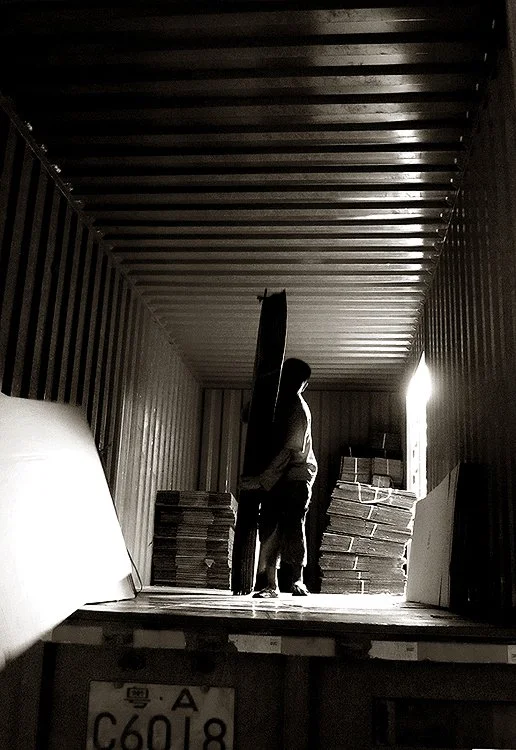
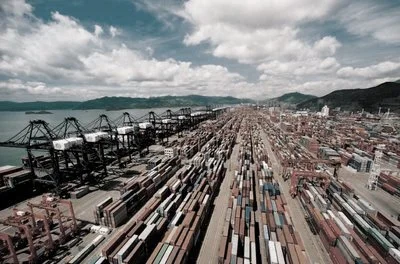
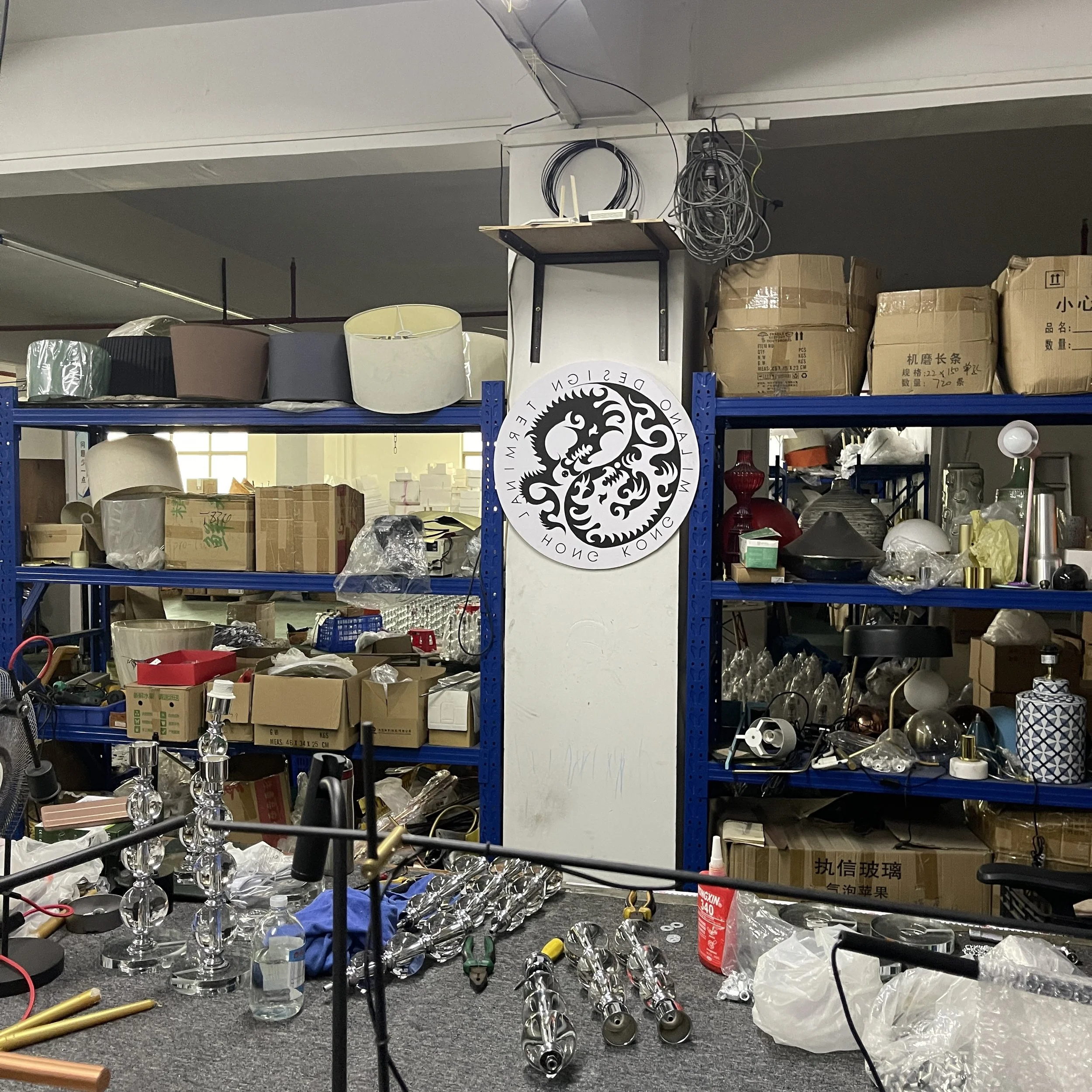
It is said that the original sign was a tattoo, etched on the back of a coolie in Kowloon, a dock worker loading goods and trucks in the beating heart of Asian manufacturing. An anonymous body, invisible labor, yet a powerful symbol engraved on the skin: a black-and-white Tao.

Within the two halves of the Tao were two dragons, one representing China and the other Vietnam—countries historically linked by trade, conflict, exchange, and shared routes. The two dots of the Tao were not mere graphic elements: they represented the pearl, the sacred object with which the water dragon plays, symbolizing knowledge, power, and transformation.

Over time, this sign was reworked and reinterpreted, evolving into the current logo.

One of the dragons was redesigned as the Visconti Biscione, the serpent devouring the Moor: the historic symbol of Milan and its vocation to dominate, transform, absorb, and regenerate.
The white dot of the Tao thus becomes the head of the Moor, transformed from a heraldic detail into a conceptual focal point.

Cultural Meaning and Identity

The Milano Design Terminal logo is not decoration; it is a statement of position.

It represents:

  • Taoism, as a philosophy of balance and flow;

  • the Chinese dragon, as productive force, continuity, and artisanal knowledge;

  • the Milanese Biscione, as design, industry, control, and strategic vision.

The mark asserts that contemporary design does not originate from a single center, but from border territories—ports, factories, markets, working bodies, and intertwined cultures.

Milano Design Terminal stands precisely at that intersection:
between European design thinking and Asian manufacturing, between project control and productive chaos, between symbolic tradition and industrial reality.

An unstable, yet fertile balance.
Exactly like the Tao